Digital marketing is the process of promoting a business, product, service, or personal brand through online channels such as search engines, social media, websites, email, and digital advertising. It helps businesses connect with their target audience, build brand awareness, and achieve their marketing goals.

What Is the Scope of Digital Marketing?

The scope of digital marketing includes several strategies that help businesses reach potential customers online. These include search engine optimisation (SEO), social media marketing, content marketing, paid advertising, email marketing, affiliate marketing, and influencer marketing.
Businesses use these strategies to attract relevant visitors, generate leads, increase sales, and build long-term customer relationships. Digital marketing also allows businesses to measure campaign performance and improve their marketing efforts using data.
7 Essential Types of Digital Marketing
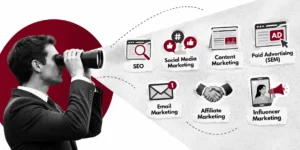
There are several types of digital marketing that businesses can use to promote their products and services online. Each technique serves a different purpose and helps businesses connect with potential customers.
1. Search Engine Optimisation
Search engine optimisation is the process of improving a website’s visibility in organic search engine results. It helps businesses attract relevant visitors without paying for every click.
SEO includes two main areas:
a) ON-PAGE SEO: This focuses on improving individual web pages through relevant content, headings, page titles, image alt text, internal links, and URLs
b) OFF-PAGE SEO: This involves activities outside a website that help improve its authority and reputation. Common techniques include earning quality backlinks and building brand mentions.
2. Social Media Marketing
Social media marketing involves promoting a business through platforms such as Instagram, Facebook, LinkedIn, and YouTube.
Businesses use social media to share content, connect with their audience, build brand awareness, and promote their products or services.
3. Content Marketing
Content marketing focuses on creating and sharing useful, relevant content to attract and engage a target audience.
Examples include blog posts, videos, guides, infographics, and educational social media posts. Good content helps businesses answer customer questions and build trust.
4. Search Engine Marketing (SEM)
Search engine marketing involves using paid advertisements to promote websites on search engine results pages.
Businesses can use platforms such as Google Ads to reach people who are actively searching for relevant products or services. Paid search advertising can help generate website traffic, leads, and sales.
5. Email Marketing
Email marketing involves sending relevant messages, updates, and promotional content to people who have subscribed to receive communications from a business.
It helps businesses maintain customer relationships, share useful information, announce offers, and encourage repeat purchases.
6. Affiliate Marketing
Affiliate marketing involves promoting another company’s products or services and earning a commission for each successful sale or action generated through a referral link.
Businesses use affiliate marketing to reach new audiences through publishers, bloggers, and content creators.
7. Influencer Marketing
Influencer marketing involves collaborating with content creators who have an established audience to promote products or services.
Businesses use influencer marketing to increase brand awareness, reach potential customers, and introduce their products through relevant content.
Benefits of Digital Marketing
Digital marketing offers several benefits for businesses of all sizes.
Wider audience reach: Businesses can connect with potential customers beyond their local area.
Targeted marketing: Campaigns can reach people based on their interests, location, and online behaviour.
Measurable results: Analytics tools help businesses understand website traffic, engagement, and campaign performance.
Cost-effective promotion: Businesses can choose marketing channels and budgets that suit their goals.
Improved customer relationships: Digital channels allow businesses to communicate directly with their audience.
Increased business opportunities: Effective campaigns can help generate leads, attract customers, and increase sales.
Conclusion
Digital marketing helps businesses promote their products and services through online channels. By using strategies such as SEO, social media marketing, content marketing, paid advertising, email marketing, affiliate marketing, and influencer marketing, businesses can connect with their target audience and work towards their marketing goals.
Choosing the right digital marketing strategies depends on the business, its audience, and its objectives. A well-planned approach can help businesses improve their online presence and build lasting customer relationships.