SEO and SEM are two common ways to attract visitors from search engines. Both can help a business reach people who are looking for its products or services, but they work in different ways.
SEO focuses on improving a website’s visibility in unpaid search results. SEM is a broader search marketing approach that can include both organic search optimisation and paid search advertising. In everyday marketing conversations, SEM is often used to mean paid search ads.
Understanding SEO vs SEM helps businesses choose the right strategy for their goals, budget, and timeline.
What is SEO?
Search Engine Optimisation (SEO) is the process of improving a website so that it can appear more prominently in organic search results. These are the unpaid listings shown by search engines.
SEO involves creating useful content, improving website structure, and helping search engines understand the pages. It can also include improving page speed, mobile usability, and the experience visitors have on a website.
Common SEO activities include:
- Researching the words and questions people search for
- Creating helpful, relevant website content
- Optimising page titles, headings, and meta descriptions
- Improving website navigation and internal links
- Making pages easier to use on mobile devices
- Earning relevant links from other websites
SEO usually takes time because search engines need to discover, understand, and evaluate changes to a website. However, well-maintained pages may continue to attract organic traffic without paying for every click.
What is SEM?

Search Engine Marketing (SEM) is a way of promoting a website through search engines. The term can include organic SEO and paid search advertising. Many marketers use SEM specifically to describe paid search campaigns.
With paid search advertising, a business creates ads that may appear when people search for selected keywords. Advertisers usually set a budget and may pay when someone clicks an ad.
Paid search campaigns can be useful when a business wants to reach potential customers quickly, promote a specific offer, or attract traffic for a particular search query.
Common paid search activities include:
- Choosing relevant keywords for ads
- Writing ad headlines and descriptions
- Setting campaign budgets and bids
- Selecting locations and audiences
- Sending visitors to relevant landing pages
- Measuring clicks, leads, and sales
Paid search can bring visibility soon after a campaign is launched, but traffic generally stops when the campaign is paused or the budget runs out.
SEO vs SEM: Key Differences
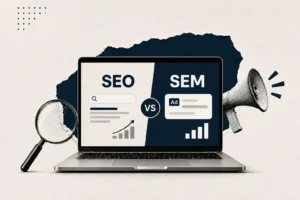
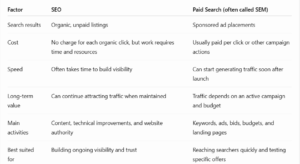
The main difference between SEO and paid search is how visibility is earned and paid for. SEO focuses on improving organic search presence, while paid search uses advertising campaigns to gain placement.
Benefits of SEO
SEO can support a business’s long-term online visibility. When a page answers a searcher’s question clearly and provides a useful experience, it may attract relevant visitors over time.
Key benefits include:
- Long-term visibility: Useful pages can continue appearing in search results after publication.
- Relevant traffic: SEO can connect a business with people actively searching for related information, products, or services.
- Trust and credibility: Some searchers prefer organic results, especially when the content is helpful and reliable.
- Improved website experience: SEO work often includes making pages clearer, faster, and easier to navigate.
SEO is not instant or guaranteed. Rankings can change, and ongoing improvements are usually needed.
Benefits of Paid Search
Paid search advertising can help businesses reach searchers when they need visibility quickly or want to promote a particular service.
Key benefits include:
- Faster visibility: Ads may begin appearing soon after a campaign is approved and launched.
- Budget control: Advertisers can set budgets and adjust campaigns based on performance.
- Targeting options: Campaigns can be shaped around keywords, locations, and other available settings.
- Measurable results: Businesses can track ad clicks and conversions, such as enquiries or purchases.
Paid search requires careful management. Costs can rise if keywords, ads, or landing pages are not relevant to the people being targeted.
Should You Choose SEO or SEM?
The right choice depends on what your business needs.
Choose SEO if your goal is to build organic visibility, publish helpful content, and attract relevant visitors over time. It can be a strong foundation for businesses that want to support their website with ongoing content and optimisation.
Consider paid search if you need to promote a time-sensitive offer, test demand, or reach potential customers quickly. It can also help businesses learn which search terms bring useful traffic.
Many businesses use both approaches. Paid search can support short-term campaigns while SEO builds organic visibility over time. The two approaches can also provide insights that help improve the overall search strategy.
Conclusion
Understanding SEO vs SEM: What’s the Difference? helps businesses make better decisions about their online marketing investments. SEO is focused on long-term organic growth, while paid search can provide paid visibility and faster results. A well-planned strategy can combine both to increase website traffic, reach potential customers, and support business growth.
If you are looking for professional guidance to build your online presence, connect with a digital marketing strategist in Kannur to develop a strategy based on your business goals, target audience, and budget.
Further reading: Google’s SEO Starter Guide