
SEO vs SEM: What’s the Difference?
If you are trying to improve your website’s visibility on Google, you have probably come across the terms SEO and SEM. Understanding SEO vs SEM: What’s the Difference? is important for choosing the right digital marketing strategy for your business. Both approaches aim to attract people through search engines, but they work in very different ways.
What is SEO?
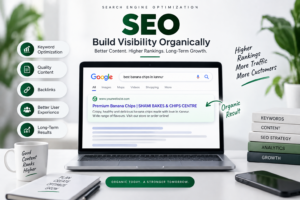
SEO stands for Search Engine Optimization. It is the process of improving a website so that it can appear higher in organic search results on search engines such as Google.
SEO focuses on several areas, including keyword optimization, high-quality content, website speed, mobile friendliness, technical improvements, internal linking, and backlinks. The main objective is to make a website more useful and relevant to both search engines and users.
One of the biggest advantages of SEO is that you don’t have to pay for every click. However, achieving strong organic rankings usually takes time. Businesses need consistent content, technical optimization, and ongoing improvements to maintain their search visibility.
What is SEM?

SEM stands for Search Engine Marketing. In general, SEM refers to using paid search advertising to promote a business on search engines. Businesses can create advertisements that appear when users search for specific keywords.
With paid campaigns, advertisers can target users based on keywords, location, interests, demographics, and other factors. This makes SEM useful for businesses that want to generate traffic, leads, or sales quickly.
Unlike organic SEO, paid search requires an advertising budget. Businesses typically pay when users interact with their advertisements, depending on the advertising model and campaign setup.
SEO vs SEM: What’s the Difference?
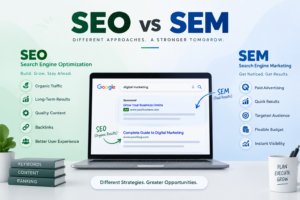
The primary difference is how visibility is achieved. SEO focuses on organic search rankings, while SEM uses paid advertising to gain visibility.
SEO is generally a long-term strategy. It requires content creation, technical improvements, keyword research, and ongoing optimization. SEM can provide faster results but requires continuous advertising investment.
Another difference is user intent and trust. Many users naturally trust organic results because they are not advertisements. Paid search, however, can be highly effective when businesses need immediate visibility for specific products, services, offers, or campaigns.
Rather than treating them as competing strategies, businesses can use SEO and SEM together. SEO can build sustainable organic traffic, while SEM can provide immediate exposure and help generate leads while organic rankings develop.
Which Strategy Should Your Business Choose?
The right approach depends on your objectives, budget, competition, and timeline.
If you want to build long-term visibility and reduce dependence on paid advertising, investing in SEO can be a strong choice. If you need immediate traffic, leads, or sales, SEM can provide faster opportunities.
For many businesses, combining both strategies creates a balanced search marketing approach. SEO builds a strong foundation, while SEM allows businesses to target valuable searches quickly.
Conclusion
Understanding SEO vs SEM: What’s the Difference? helps businesses make better decisions about their online marketing investments. SEO is focused on long-term organic growth, while SEM provides paid visibility and faster results. A well-planned strategy can combine both to increase website traffic, reach potential customers, and support business growth.
If you are looking for professional guidance to build your online presence, connect with a digital marketing strategist in Kannur to develop a strategy based on your business goals, target audience, and budget.